Overview
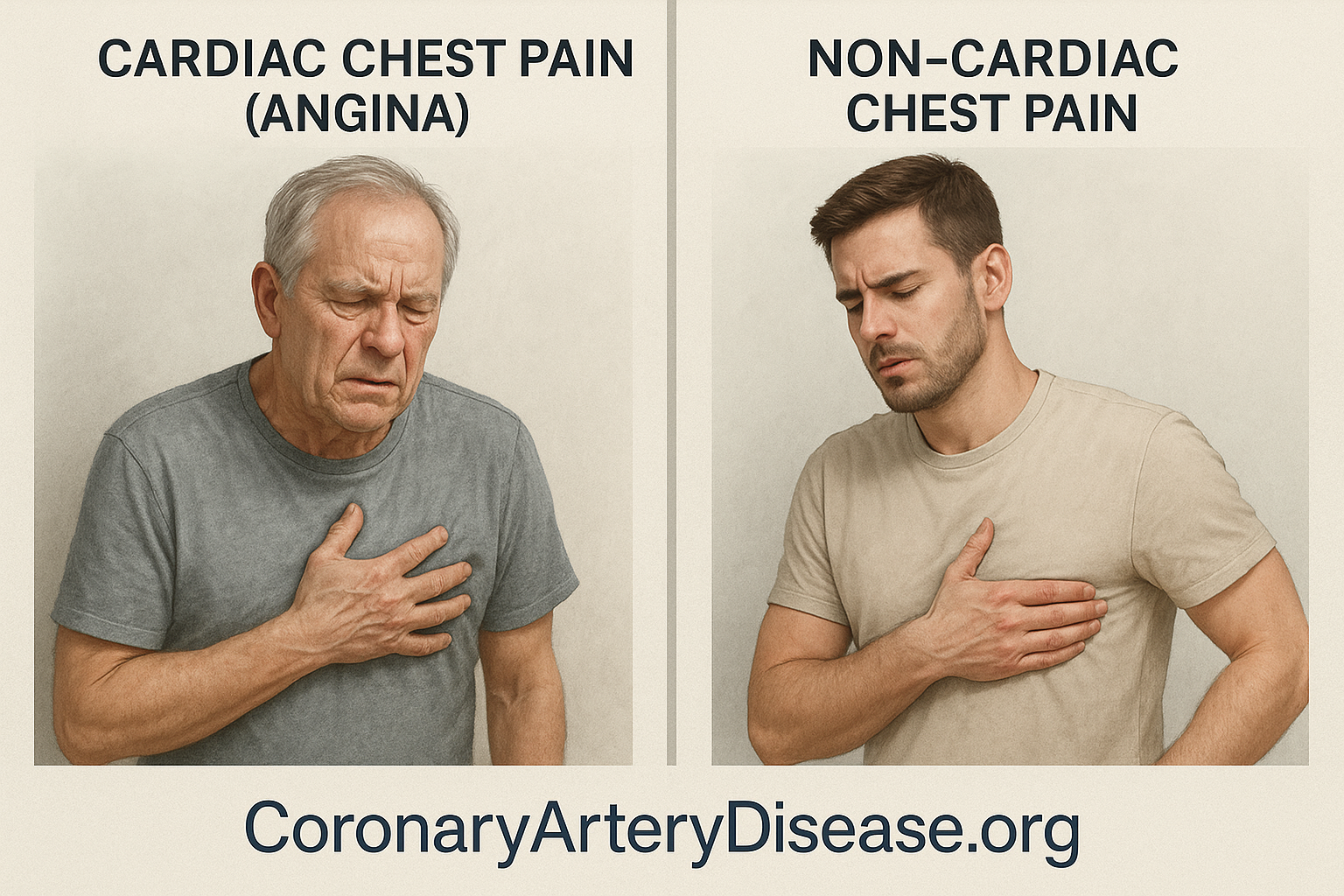
When your heart muscle isn’t getting enough oxygen-rich blood, you might feel a discomfort known as angina pectoris. This lack of oxygen is called myocardial ischemia. While angina is a significant sign of a heart issue, “chest pain” is a much broader term that can describe discomfort from many different sources, not just your heart. Understanding What is the difference between angina pain and chest pain, is crucial for you and your doctor to determine if the pain is cardiac (heart-related) or non-cardiac.
Recognizing these differences helps to distinguish angina, which often presents with specific feelings, locations, and triggers, from non-cardiac chest pain, which frequently has different characteristics. Most importantly, Providing a detailed description of the symptoms is key for an accurate diagnosis.
In Details
The Characteristics Differentiating Cardiac (Angina) from Non-Cardiac Chest Pain
Feelings/Descriptors
- Cardiac Pain (Angina): Heavy, tight, pressure, dull, band-like, squeezing.
- Non-Cardiac Pain: Sharp, stabbing, shooting, needle-like.
Location/Site
- Cardiac Pain (Angina): Central anterior (middle of the chest), left arm, right arm, teeth, between shoulder blades (interscapular), upper stomach area (epigastric).
- Non-Cardiac Pain: Left side below the breast (left sub mammary), right side below the breast (right sub mammary).
Triggers/Precipitants
- Cardiac Pain (Angina): Exercise, emotion, cold temperatures, after eating (post-prandial).
- Non-Cardiac Pain: Stress, tender to touch in a specific spot (locally tender), after eating (post-prandial), certain body positions or movements of arms or neck, swallowing (odynophagia).
Relieving Factors
- Cardiac Pain (Angina): Rest, medication like sublingual nitrates (medication taken under the tongue that widens blood vessels)
- Non-cardiac chest pain (NCCP) can be relieved by addressing the underlying cause, which may include gastrointestinal issues, musculoskeletal problems, or psychological factors.
| Comparison | Cardiac Pain (Angina) | Non-Cardiac Pain |
|---|---|---|
| Feelings/Descriptors | Heavy, tight, pressure, dull, band-like, squeezing | Sharp, stabbing, shooting, needle-like |
| Location/Site | Central anterior (middle of the chest), left arm, right arm, teeth, between shoulder blades (interscapular), upper stomach area (epigastric) | Left side below the breast (left sub mammary), right side below the breast (right sub mammary) |
| Triggers/Precipitants | Exercise, emotion, cold temperatures, after eating (post-prandial). | Stress, tender to touch in a specific spot (locally tender), after eating (post-prandial), certain body positions or movements of arms or neck, swallowing (odynophagia) |
| Relieving Factors | Rest, medication like sublingual nitrates (medication taken under the tongue that widens blood vessels) | Relieved by addressing the underlying cause, which may include gastrointestinal issues, musculoskeletal problems, or psychological factors. |
Angina pain arises when nerve endings near the heart’s inner lining, called the endocardium (the innermost layer of the heart), are stimulated by certain substances like adenosine, lactate, and hydrogen ions. These signals travel through specific nerve pathways, primarily sympathetic fibers (nerves that are part of your “fight or flight” system) to your spinal cord and brain. Because the pain originates from an internal organ, it’s often described as visceral pain (pain from internal organs), which tends to be less precise in its location and can spread to other areas, leading to individual variations in how it’s felt. This explains why angina can be felt as a vague pressure or tightness rather than a sharp, pinpointed pain.
The most common cause of angina is coronary atherosclerosis. This is a condition where fatty deposits, called plaques, build up inside the walls of your coronary arteries (the blood vessels that supply blood to your heart muscle). These plaques narrow the arteries, making it harder for enough oxygen-rich blood to reach the heart, especially when the heart has to work harder, such as during physical activity, emotional stress, or exposure to cold. The pain typically eases with rest because the heart’s demand for oxygen decreases. Medications like sublingual nitrates can also provide relief by helping to widen the blood vessels.
In contrast, non-cardiac chest pain often has different triggers and characteristics. For example, pain that is sharp, stabbing, or shooting and that can be tender to touch in a specific spot might indicate a problem with the muscles or bones in your chest wall (musculoskeletal pain). Pain that worsens with specific body positions or movements of your arms or neck can also point to musculoskeletal issues. Similarly, pain that occurs after eating, or worsens with swallowing (called odynophagia), is more likely to be related to problems in your digestive system, such as esophagitis (inflammation of the esophagus) or esophageal spasm. It’s important to remember that sometimes, a person can experience both angina and non-cardiac chest pain, and atypical forms of angina can occur, for example, interscapular (between shoulder blades) or epigastric (upper stomach area) pain without anterior chest discomfort. This is especially true in individuals with known risk factors for heart disease like age, male gender, family history, smoking, diabetes, and high cholesterol. Therefore, a thorough and detailed history of your symptoms is crucial for an accurate diagnosis.
Other similar questions
What are the other things cause chest pain that isn’t angina?
Stress, musculoskeletal issues like costochondritis (inflammation of cartilage) or rib injuries, gastrointestinal problems like GERD (acid reflux) or ulcers, lung conditions like pleurisy or pneumonia, and even anxiety or panic attacks, and others.
Resources
Clinical presentation and diagnosis of coronary artery disease: stable angina
S W Davies Department of Cardiology, Royal Brompton Hospital, London, UK

Leave a Reply